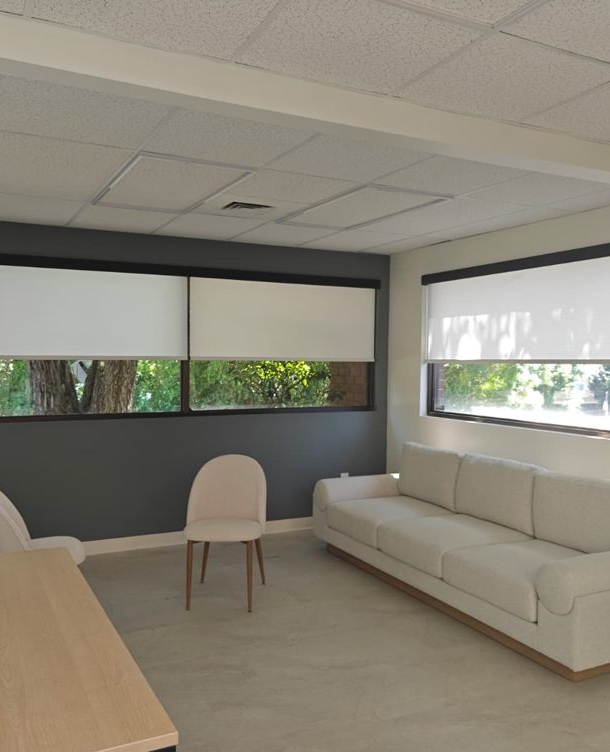
Solar mesh is primarily a daylight tool
Solar shade fabric has an open weave. It can reduce glare and retain a view outdoors, with the result depending on fabric color, openness and lighting conditions. That makes it worth considering for desks, reception areas and shared spaces where daylight matters.
It should not be treated as guaranteed privacy. Visibility through mesh changes with the balance of light inside and outside. A room that feels private on a bright afternoon can be more exposed once the lights are on inside and it is dark outdoors.
Opaque fabric solves a different problem
An opaque fabric blocks light through the fabric itself. That can make it more appropriate where a room needs visual privacy or stronger light control. It also removes the view while the shade is down.
Blackout fabric is not the same as a fully dark room. Light can still enter around the sides, above the roller or below the shade. The mounting arrangement and any side or sill channels need to be considered with the fabric, particularly for presentation spaces.
Some rooms need both
A conference room may need filtered daylight for a discussion and more darkness for a screen presentation. A space occupied into the evening may need daytime view and privacy after sunset.
A dual roller arrangement uses separate mesh and opaque shades so either can be lowered as needed. It requires space for the hardware and coordination of the controls. It is an option to review, not an automatic requirement for every room.
Test the question you actually need answered
When reviewing a sample, ask whether the goal is less glare, less view into the room or less light overall. Those are different goals. Check the sample in the intended lighting conditions rather than judging it only on a swatch card.
For a project with sensitive privacy needs, make the requirement explicit in the scope. The selected fabric and complete installation should be reviewed against that requirement before purchase.
Compare commercial roller and solar shade options for your space.